PORTFOLIO SUPPORT

Portfolio Best Practices

Every PortCo is doing things differently. Here's how to use AI to benchmark them all, extract what the top performers did, and route those practices to portcos that could apply them.

AI prompts for quarterly fund marks movers
  1. Benchmark the Portfolio on Key Operating Metrics

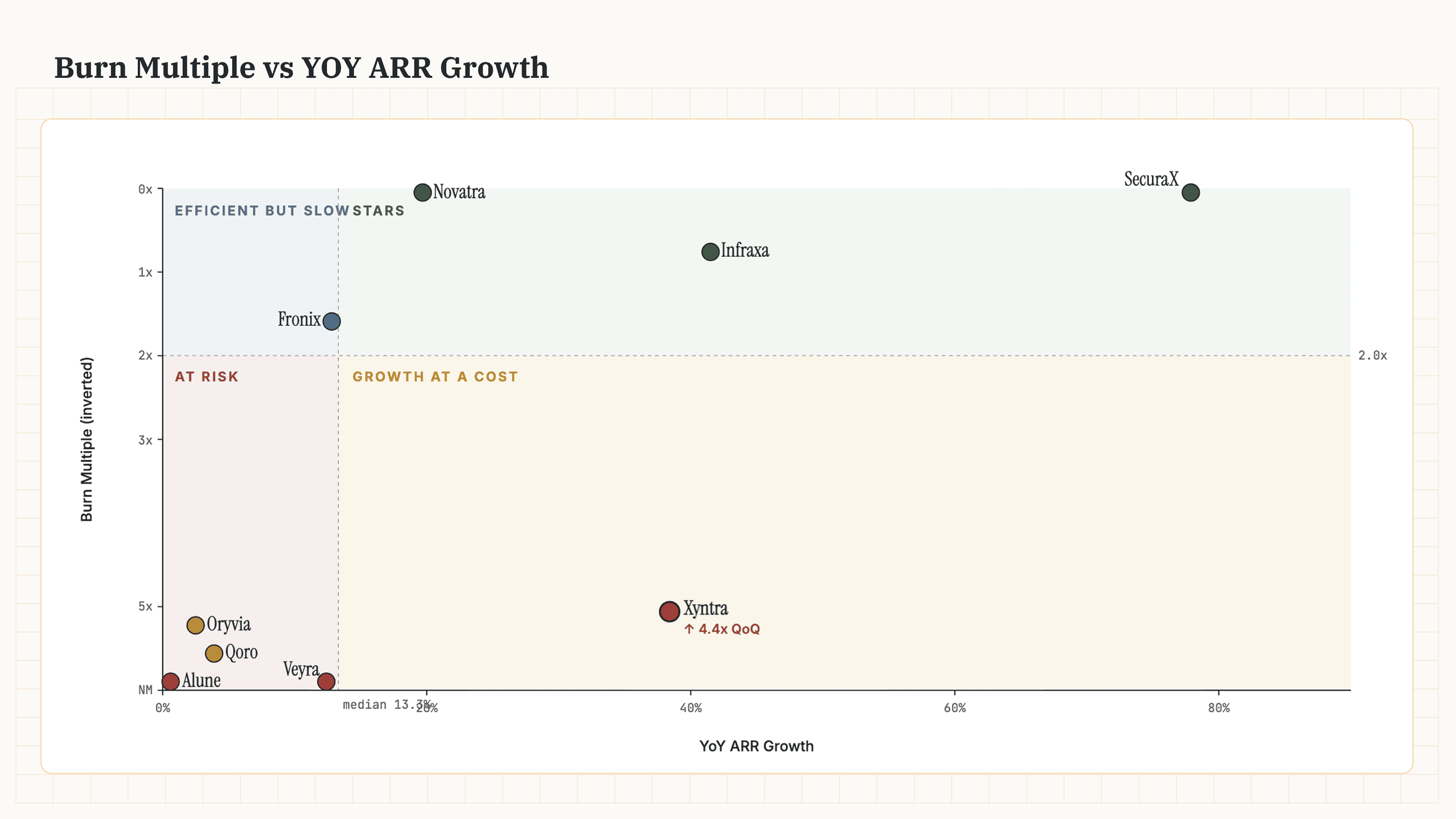
For each key metric, rank all PortCos and flag top and bottom performers. The gap between them is where the learning opportunity lives, and who could learn from whom.

Prepare your data

Latest quarter Gross Margin, NDR, Cash, Cash Burn, ARR, Net New ARR, S&M expenses, MAU, DAU per portco.

Prompt

Across the portfolio, rank all portcos on each of these operating metrics: - Gross Margin (all business types) - Magic Number = annualized Net New ARR / S&M expense (B2B only) - NDR (B2B only) - DAU/MAU stickiness (consumer only) - MAU YoY growth (consumer only) - Runway in months, computed from cash / quarterly burn × 3 (all business types) For each metric, output: portfolio median, top 3 performers with their values, bottom 3 with values. Sort metrics with the widest spread first — that's where the biggest learning opportunity lives. Below the table, add a short commentary calling out companies that show up in the top 3 across multiple metrics — those are the highest-signal best-practice sources.

Across the portfolio, rank all portcos on each of these operating metrics: - Gross Margin (all business types) - Magic Number = annualized Net New ARR / S&M expense (B2B only) - NDR (B2B only) - DAU/MAU stickiness (consumer only) - MAU YoY growth (consumer only) - Runway in months, computed from cash / quarterly burn × 3 (all business types) For each metric, output: portfolio median, top 3 performers with their values, bottom 3 with values. Sort metrics with the widest spread first — that's where the biggest learning opportunity lives. Below the table, add a short commentary calling out companies that show up in the top 3 across multiple metrics — those are the highest-signal best-practice sources.

Copy prompt

Copied

Output
  1. Extract What the Top Performers Actually Did

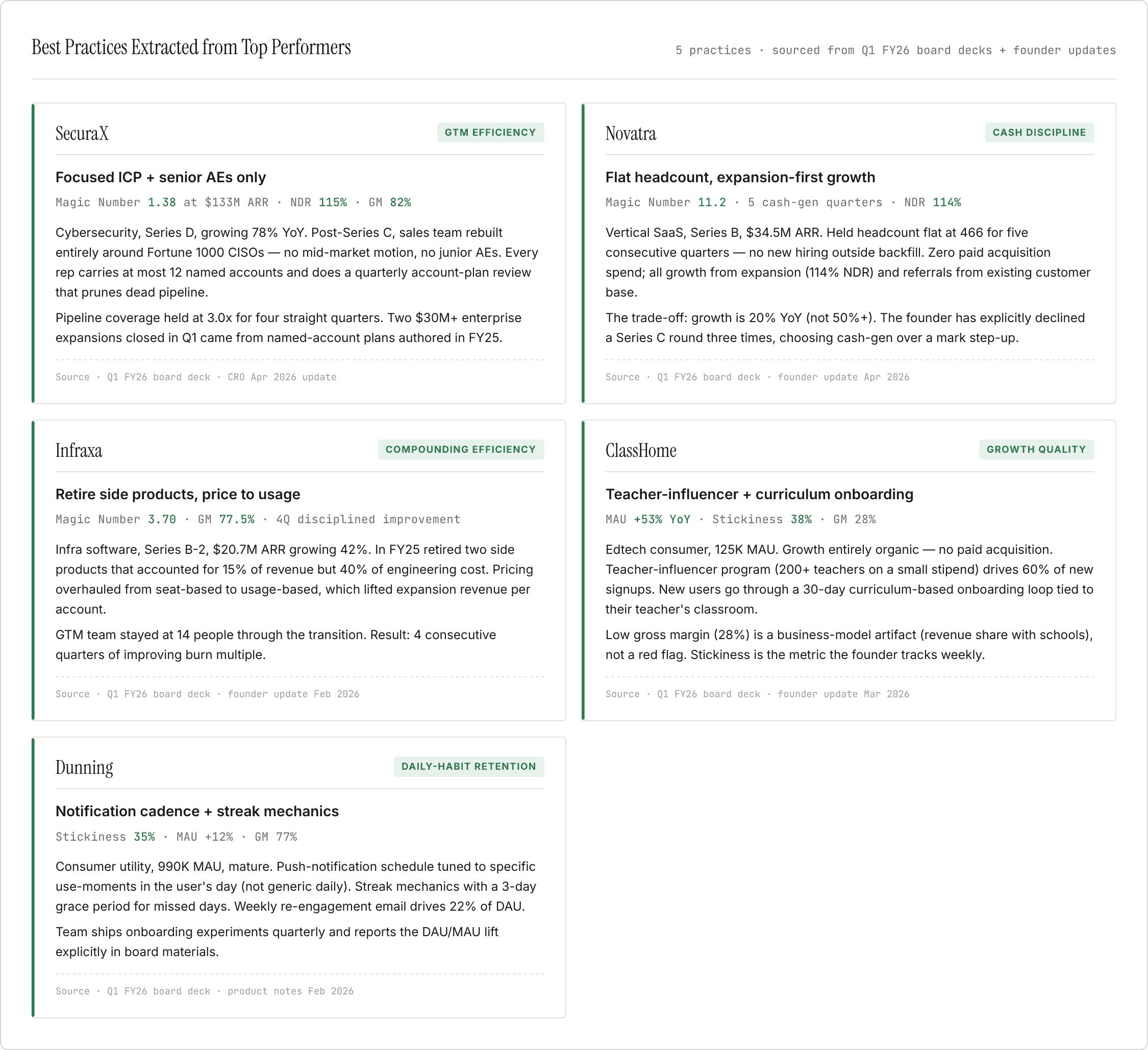
For each top-quartile performer, pull the qualitative story from board decks and founder updates about what they are actually doing. Extract portable practices.

Prepare your data

For each top performer from Step 1, the last two board decks and founder updates from PIQ.

Prompt

For each top-quartile performer identified in Step 1, extract the practice — what they actually did to produce the result. Structure each as: - Company + practice title (2–5 words) - Metric result (the benchmark number) - Context (stage, business shape) — required so someone reading knows if it applies to their situation - Practice — 2–3 sentences on what they actually did. Concrete actions, not principles. Pull from the last two board decks and founder updates. Where the founder has stated the practice explicitly, quote it. Where you're inferring from the pattern, say so. Do not draft advice. Extract what happened.

For each top-quartile performer identified in Step 1, extract the practice — what they actually did to produce the result. Structure each as: - Company + practice title (2–5 words) - Metric result (the benchmark number) - Context (stage, business shape) — required so someone reading knows if it applies to their situation - Practice — 2–3 sentences on what they actually did. Concrete actions, not principles. Pull from the last two board decks and founder updates. Where the founder has stated the practice explicitly, quote it. Where you're inferring from the pattern, say so. Do not draft advice. Extract what happened.

Copy prompt

Copied

Output
  1. Route Each Practice to Portcos That Could Apply It

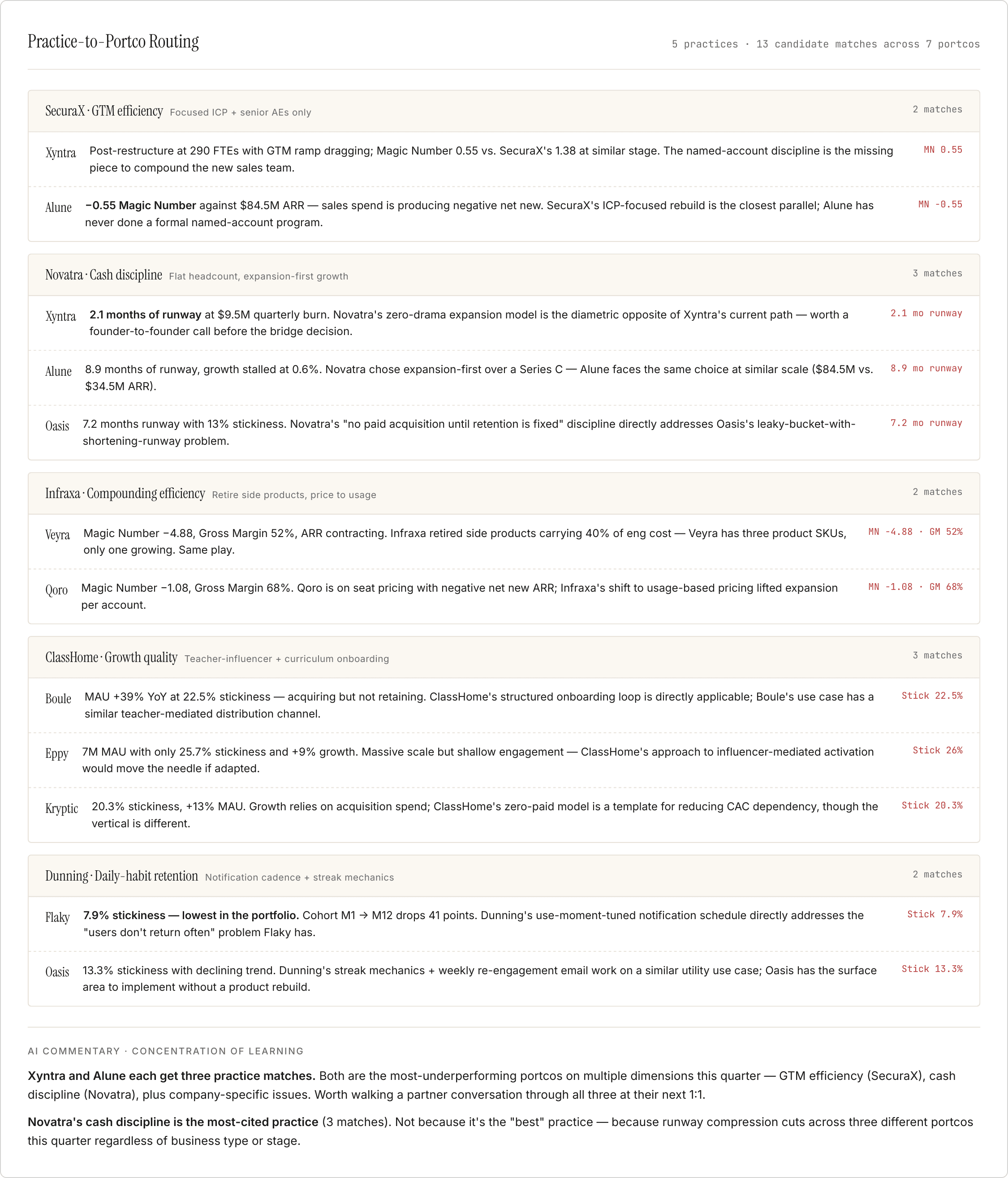
Match each practice to the PortCos that are underperforming on that metric AND are stage-appropriate to apply it. The output is a routing table the partner can use in the next founder meeting

Prepare your data

Step 2's practices. Step 1's bottom-quartile list. Each portco's stage, business shape, and current situation from PIQ.

Prompt

For each practice from Step 2, find the portcos that: 1. Are in the bottom quartile on the corresponding metric, AND 2. Are stage-appropriate to apply the practice (a seed-stage co can't run a Series D GTM motion) For each match, output: source practice, target portco, one-line rationale on why this specific practice fits this specific portco. If a portco has multiple underperforming metrics, it can receive multiple practices — list each as its own match. Where no clean match exists (e.g., a practice with no portcos in the bottom quartile), say so — don't force-fit.

For each practice from Step 2, find the portcos that: 1. Are in the bottom quartile on the corresponding metric, AND 2. Are stage-appropriate to apply the practice (a seed-stage co can't run a Series D GTM motion) For each match, output: source practice, target portco, one-line rationale on why this specific practice fits this specific portco. If a portco has multiple underperforming metrics, it can receive multiple practices — list each as its own match. Where no clean match exists (e.g., a practice with no portcos in the bottom quartile), say so — don't force-fit.

Copy prompt

Copied

Output

This analysis was one-shotted with Claude + PortfolioIQ MCP

This analysis was one-shotted with Claude + PortfolioIQ MCP

AI does great analysis, getting the data ready is the hard part

AI does great analysis, getting the data ready is the hard part

AI does great analysis, getting the data ready is the hard part

PortfolioIQ manages your data: extraction from documents, standardization, reconciliation across sources and human checks. Plugs latest, accruate data to wherever you do your work. Claude, ChatGPT, Excel or the PortfolioIQ platform.